Sunday, October 21, 2012

A Cold War instead of a Space War

The International Space Station has pretty much everything you could possibly need while in low Earth orbit. Including its solar panels, it is roughly the size of a (U.S.) football field. Inside, it has as much pressurized space as a Boeing 747 jet. ISS residents have access to two bathrooms, a gym, and, in case they're feeling homesick, a giant window for Earth-gazing.

Astronaut Tracy Dyson, floating in front of the cupola.
Source: Wikipedia.

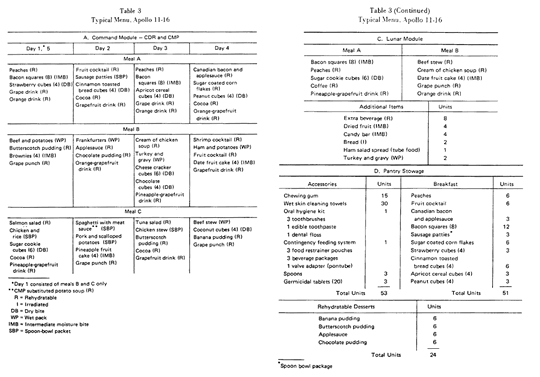
The menu for the six astronauts living aboard the ISS is varied and tasty: brownies, sushi, fajitas, and cherry-blueberry cobbler. You have high-speed internet access, your own little bedroom, and once in a while, an ice cream social. 

Half of the ISS Expedition 26 crew, peeking out of their "rooms" on Christmas morning.
Source: Onorbit.

But... a 1970s Soviet military space station, the Salyut 3, has got the ISS beat in one strange way. What does Salyut 3 have that the ISS is missing? A 23 millimeter automatic cannon, mounted to the long axis of the station.

A Nudelman-Rikhter "Vulkan" gun.
Source: dailycosmicnews.blogspot.com.

Reports on the cannon, and whether it was ever fired, are a bit sketchy. Some sources identify the gun not as a Nudelmann 23 millimeter auto-cannon, but a Nudelmann NR-30 30 millimeter cannon. Despite the gun's existence being declassified after the Cold War ended, it seems that most of the information the world has on Earth's first true space weapon is hearsay and rumor.

However, the reason for the gun is clear. Salyut 3 was a military space station, meant to be crewed by air force officers and tasked with spying. The station orbited at a low altitude to aid in photographing Earth's surface (about 50 miles below there the ISS usually sits). According to Russian sources, the auto-cannon was installed "for defense against U.S. space-based inspectors/interceptors."

Salyut 3.
It is thought that the dish antenna at the bottom right is for transmitting encrypted data (i.e., spy photographs).
Source: astronautix.com.

The gun could only be pointed at a target by moving the entire space station to face the target. A periscope peering out of the station served as the gun's sight.

Salyut 3 under construction.
Source: Svengrahn.pp.se.

Its construction took into account Newton's Third Law of Motion (for every action there is an equal and opposite reaction). The station was equipped with special maneuvering engines that would automatically counteract the thrust of the gun firing with engine thrust.

Just as the cannon's operation didn't violate the laws of physics, its existence didn't violate international law either. At the time that Salyut 3 was launched, the Soviet Union had signed and ratified the 1967 U.N. treaty governing weapons in space, the Outer Space Treaty. But this Treaty only bans "weapons of mass destruction" in space. It seems unlikely that a 23 millimeter automatic weapon would qualify.

Negotiating the Outer Space Treaty.
Source: www.rocketlawyer.com.

Was Salyut 3's gun ever fired in space? Probably- though fortunately it was never aimed at any American astronauts. The commander of the only crew to actually use Salyut 3, Pavel Popovich, claims the gun was never fired while cosmonauts were on board. But, it is believed that the gun was tested at the end of Salyut 3's lifespan, while the space station was empty but before it was de-orbited.

The only crew of Salyut 3: Pilot Yuri Artyukhin and Commander Pavel Popovich.
Source: svengrahn.pp.se.

There's one other odd fact I want to share on the subject of armed space stations. While we can all be grateful that the ISS doesn't have a large automatic weapon mounted outside, there are in fact usually two pistols aboard the ISS.

Each of the ISS's two Soyuz escape pods is equipped with a pistol. Neither NASA nor the Russian Space Agency provide many details on it, but cosmonauts have said that they are the typical sidearms carried by members of the Russian military. Unlike the Salyut 3 auto-cannon, these pistols are not meant to protect against armed space invaders. Their stated purpose is to protect astronauts and cosmonauts from danger they might encounter on landing.

Space tourist Mark Shuttleworth training to shoot the Soyuz's gun.
Source: MSNBC.

Which may sound far-fetched... but history records the dangers not just of space travel, but also the dangers one may face after landing. Back in 1965 the crew of the Voskhod 2 landed 200 miles off course, deep in the Ural Mountains. They reported hearing wolves prowling around their space capsule as they waited overnight for rescue.

Voskhod 2 also featured the first ever space walk!
Here's Pilot Alexy Leonov's own painting depicting his walk in space.
Source: blog.matthen.com.

That's not the only time cosmonauts have encountered danger after landing their spacecraft. Check this out this story too!

Source: Fourmilab.ch; spaceyard.blogspot.com; astronautix; langston.com; svengrahn.pp.se; MSNBC; Wikipedia.

Monday, October 15, 2012

Carnival of Space #271!

Today I'm hosting the "Carnival of Space" for the first time! The Carnival is a weekly round-up of interesting space stories. If you've got a space-related blog, you too can join the Carnival of Space. Email carnivalofspace@gmail.com to host a weekly carnival, share a story you wrote, and get to know other space bloggers.

Welcome to the Carnival!
Source: Walt Disney, via Wikipedia.
  • This week a potentially hazardous 72 foot diameter asteroid whizzed by the Earth, coming as close as less than 20% the distance between the Earth and the Moon! Astroblogger discusses our close encounter. He even has photographs of it!
  • Peter Lake hosted a Google plus Hangout this week, along with Shahrin Ahmed and Hamant Kumar. They shared photos of the Comet Hergenrother, an interview and commentary by Carl Hergenrother. Dr. Hergenrother discovered of Comet Hergenrother! And, he's the co-lead staff scientist at the University of Arizona, working on the OSIRIS-REx Target Asteroids Mission.
  • Over at Next Big Future, you can read about a newly discovered comet, C/2012 S1 (ISON), which will be headed for a close encounter with Earth in 2013. On Sunday, November 28th, 2013, the comet will show up in the night sky at a magnitude of 16- brighter than the full moon! And, brighter than 1997's Hale-Bopp comet or our next major comet visitor, Comet Pan-STARRS in March 2013.
  • Also at Next Big Future, there's a story about Astrobiotic's shot at the moon and the $20 million Google Lunar X prize. Astrobiotic is developing a solar-powered landing module and a small rover, as well as rover destined to explore one of the moon's poles and drill for water.
  • And, you can read about SpaceX's recent mission over at Next Big Future. This past week the SpaceX Dragon capsule succeeded in resupplying the International Space Station, but failed in its secondary task of launching a satellite.

Apparently there almost was a real, live Carnival of Space:
The Space City USA Amusement Park, planned but never constructed in Alabama.
Source: The Huntsville Times.

Sunday, October 7, 2012

The Deep Space Network, Part I

Right now, there are over twenty functioning human space probes exploring our solar system (or the interstellar space just beyond it). This includes:

  • Orbiting Mars: Mars Odyssey, Mars Reconnaissance Orbiter, and Mars Express. 
  • Roving Mars: Curiosity and Opportunity.
  • Observing the sun: Solar Terrestrial Relations Observatories A and B, the Solar and Heliospheric Observatory, Advanced Composition Explorer, and the Global Geospace Science Satellite.
  • Orbiting Mercury: Mercury Messenger.
  • En route to Venus: The Akatsuki probe.
  • Orbiting Venus: The Venus Express.
  • En route to the dwarf planet Ceres: The Dawn probe, fresh off a visit to the asteroid Vesta.
  • En route to Pluto: The New Horizons probe will flyby the dwarf planet and its moons in 2015.
  • En route to Jupiter: Juno will arrive in 2016.
  • Orbiting Saturn: Cassini has been observing Saturn and its moons since 2004.
  • En route to asteroids and comets: Chang'e 2 and Rosetta.
  • Heading for interstellar space: Voyagers 1 and 2, which are leaving the solar system at speeds of over 34,000 miles per hour.
Quite an accomplishment for a species that first achieved powered flight not much more than a century ago!

One result of all this exploring is that right now, around the world, there are hundreds of human beings whose job is communicating with robots orbiting Saturn, or roaming Mars, or headed towards a close-ish encounter with the Sirius binary star system (Voyager 2 will cruise within 4.5 light years of that star in 296,000 years).

The Sirius system, as viewed by the Hubble Space Telescope.
Source: Wikipedia.

When I counted up all these active interplanetary missions, I started to wonder: how exactly do we communicate with all these spacecrafts? There are so many of them, and they're all so far away. Voyager 2, for example, is over 11.3 billion miles from Earth! 

Voyager 1.
Source: NASA.

NASA scientists communicate with interplanetary and interstellar probes via radio waves. They send and receive these waves using detectors and transmitters situated inside enormous dish-shaped antennas. Primary, NASA missions rely on dish antennas installed at three facilities around the world. Together, these three facilities comprise the Deep Space Network.

1. Goldstone Observatory in California's Mojave Desert.
It's situated 45 miles outside Barstow, California.
Source: Minglebox.
2. The Madrid Deep Space Communication Complex.
It's situated 37 miles outside Madrid, Spain.
Source: Space Today.
3. The Canberra Deep Space Communication Complex.
It's situated 25 miles outside Canberra, Australia.
Source: Wikipedia.

The Deep Space Network consists of these the three sites because Barstow, Madrid, and Canberra are positioned roughly a third of the world apart from the other. This ensures that as the Earth rotates one of them is always able to receive signals from deep space. Additionally, the three locations are fairly remote, reducing interference from Earth-based radio sources. The dish antennas at the three sites are all set in the center of bowl-shaped valleys in semi-mountainous areas, further isolating them from interference.

The Deep Space Network's 360 degree view of outer space.
Source: Wikipedia.

Each of the three Deep Space Network locations has at least four dish antennas, ranging in size from 85 feet in diameter to 230 feet in diameter. These dishes funnel radio signals towards detectors sitting below the dishes. The detectors receive high frequency radio waves from spacecraft and send back instructions via a powerful radio signals.

A dish antenna, like those that make up the Deep Space Network.
Source: exploremars.org.

The Deep Space Network serves other functions besides allowing communication between Earth-based scientists and spacecraft. Its antennas can also be used to determine a probe's distance from Earth, accurate to a distance of less than 30 feet. This tracking is necessary because the probes are too small to see with telescopes. Spacecraft tracking occurs through a process called "ranging": the dish transmits a signal to the probe, and the probe's computer knows to immediately transmit this signal right back to Earth. The time between sending the signal and receiving the reply, minus the turnaround time and divided by two, is the distance it took light to travel to the craft!

The Deep Space Network's dishes are also used by astronomers to study planets, stars and other objects in our solar system and beyond. Some of the Network's smaller (85 foot in diameter) dishes are used to communicate with Earth-orbiting satellites.

Pioneer 10.
The high-gain antenna used for transmitting to Earth is the large dish on the back of the craft.
Source: Wikipedia. 

According to JPL, NASA's interplanetary mission teams rely on a "sophisticated scheduling system" and "teams of hundreds of negotiators" to coordinate sharing of the Deep Space Network's facilities. The Network telescopes in a given location can simultaneously receive data from multiple spacecraft, so the Network is not limited to serving one craft at a time.

However, the Network's capacity is being tested... missions like Opportunity and the Voyagers are long outliving their planned lifetimes, by years and sometimes even decades. Meanwhile, new spacecraft are sent out explore. So, there is growing concern that one day soon we'll need more extraterrestrial communication abilities than the Network provides.

Mars Reconnaissance Orbiter watches Curiosity land:
We now have Martian spacecraft spying on our other Martian spacecraft!
Source: Wikipedia.

For now, the Deep Space Network is shared by each planetary mission according to a predetermined schedule. Even an extremely active mission, like Curiosity, typically only uses the Deep Space Network to send and receive data for a couple hours once or twice a day. However, this can change in an emergency. If something goes wrong with one of the spacecraft exploring the solar system, engineers will put into use the largest Deep Space Network antennas. They'll array these antennas to send and receive bigger than normal amounts of data to the craft, in the hopes of determining what has gone wrong and fixing it.

Cassini's view of Saturn. Can you see the teeny tiny dot on the left, near the second farthest out ring?
That's Earth!
Source: NASA.

There's even an instance of the Deep Space Network being used to rescue astronauts! When an oxygen tank aboard Apollo 13's service module exploded on April 13, 1970, it left the crew without enough electricity (generated by fuel cells that ran on oxygen and hydrogen) to run their spacecraft at full power.

So, in a desperate attempt to conserve the craft's limited power supply, the astronauts shut down all but a few instruments. You'll recall from the movie Apollo 13 that the Commander Lovell and the crew spent the rest of their mission floating in near darkness, in freezing temperatures.  Without the electricity to run the craft's power-hungry high-gain antennas, the astronauts relied on the craft's weaker antenna to communicate with Earth.  This antenna's signals were too weak for the Manned Space Flight Network radio dishes to receive, so the Deep Space Network stepped in. The biggest Deep Space Network antennas in existence at the time were arrayed to send and receive signals from the craft. The resulting communication was a bit patchy, but good enough to get the crew home.

Apollo 13 splashes down safely.
Source: Wikipedia.

Note: Part II of this post is available here!

Sources: io9, JPL, Supernova Condensate, Wikipedia, Space Today, Popular Mechanics.

Sunday, September 30, 2012

An Astronaut from the South Side

In 1969, NASA hired seven new astronauts. What's different about these seven than most NASA astronauts is that all of them already were astronauts before they were actually hired by NASA. That's not to say that they'd flown in space before: none of them had. However, all seven had already been trained as astronauts by the U.S. Air Force, as part of its military space program.

The Air Force established a space program soon after it was created as a separate branch of the military in 1947. Throughout the 1960s, the Air Force hired 17 pilots from the Air Force, Marine, and Navy, intending to send them to a military space station, the Manned Orbiting Laboratory.

The planned Manned Orbiting Laboratory.
Source: Wikipedia.

The Manned Orbiting Laboratory would have been a surveillance platform and a temporary home for military astronauts who would spend their time watching and photographing the Earth below. But unmanned satellite technology pretty soon advanced to the point where it was just as effective (and much, much cheaper) than sending astronauts into orbit to photograph the Earth. So, in 1969, the Manned Orbiting Laboratory was cancelled, and 7 of the youngest of the 17 Air Force astronaut were hired as NASA astronauts. All 7 eventually flew on the space shuttle in the 1980s.

Another view of the Manned Orbiting Laboratory.
Source: NASA.

What happened to the other 10 Air Force astronauts at the end of the program? Most resumed work for the branch of the service they had originally worked for, with some flying combat missions in Vietnam and one former astronaut, James Abrahamson, advancing to the rank of general. One became a pilot for NASA. One went back to school for a master's degree. One died in a T-38 crash in 1970.

But by the time the Manned Orbiting Laboratory program was cancelled, two of the 17 had already been killed in training accidents. It's a shockingly high number, though unfortunately not surprising, given that all 17 were military pilots, and many flew experimental aircraft.

One of the 17, a test pilot named Major Michael Adams, died in a plane crash in 1967. He took his X-15 over 50 miles above the Earth's surface. The Air Force considers 50+ miles to be outer space and awards astronaut wings to pilots who fly that high. Minutes later, travelling at over 3,400 miles per hour, Major Adams' X-15 went into the world's first "hypersonic spin." Amazingly, he was initially able to recover control over the craft, but at that point it was plummeting towards the ground, and it's believed that the g-forces caused him to loose consciousness. Thus he was unable to eject from the plane when the stress of the dive tore it apart.

Major Michael Adams.
Source: Wikipedia.

The other one of the 17, Major Robert Lawrence Jr., died in 1967 while serving as a flight instructor. The plane his trainee was flying crashed on landing. Major Lawrence's ejection seat malfunctioned, threw him out of the plane horizontally, and he died on impact.

Major Robert Lawrence.
Source: MSNBC.

If he had lived to join the 1969 NASA astronaut class, Major Lawrence would have become NASA's first African-American astronaut. But instead, NASA did not hire any African-American astronauts until 1978, and Colonel Guion Bluford became the first African-American in space in 1983.

The 1978 astronaut class.
Source: Wikipedia.

Major Lawrence was born and raised where I now live: on the South Side of Chicago! For any interested locals, his childhood home was on the corner of 23rd Street and South State Street. We drove over to that block the other evening. Back when Major Lawrence was born in the 1930s, it was working class, all townhouses and apartment buildings. By the time he died, the neighborhood had gone downhill and been turned into housing projects. But the projects have since been razed, and most of his block is now an empty field.

South State Street and 23rd Street: the birthplace of an astronaut!

In interviews a few weeks after his death, Major Lawrence's family shared their favorite memories of the deceased astronaut. Throughout his childhood, he loved playing chess and building model airplanes. He was musically gifted, and was once hit by a truck on his way to piano lessons, only to pick himself up, brush himself off, and make it to the lesson on time. Major Lawrence asked for the same Christmas present every year: a larger and more advanced chemistry set than he'd gotten the previous Christmas.

In high school, Lawrence lettered in cross-country and track and field. He graduated early, at age 16. In college, he majored in Chemistry and joined the ROTC. After graduating, he served as a test pilot and instructor pilot, training both U.S. Air Force and German Air Force pilots. Since he was a test pilot, I suppose it goes without saying that he owned a Porche and drove it too fast (or as his father called it, "flew too low").

By the time he was thirty, Major Lawrence had earned a PhD in Physical Chemistry at Ohio State. When he was thirty-one, he was selected as an Air Force astronaut. He he died two months after his thirty-second birthday.

The 1967 class of Air Force Astronauts.
The three who lived became Vice Chair of the Joint Chiefs of Staff; a NASA astronaut; and a General.
Source: CollectSpace.

Major Lawrence left behind a wife, Barbara Cress Lawrence, and young son. In 2007, his widow spoke about the prejudice Lawrence encountered as the first African-American astronaut during a StoryCorps interview. The interview is available here.

Since they didn't fly on NASA missions, Majors Lawrence and Adams have been largely forgotten by history. Eight deceased astronauts and six deceased cosmonauts were memorialized in a plaque the Apollo 15 astronauts left on the moon in 1971, but Adams and Lawrence, the only two deceased Air Force astronauts, were not named on the plaque. 

The Fallen Astronaut memorial at Hadley Rille.
Source: Wikipedia.

Major Adams was honored on the Astronaut Memorial at Cape Canaveral when it opened in 1991. Major Lawrence was not. The questionable bureaucratic reasoning for this omission was that unlike Adams, Lawrence had not been awarded Air Force astronaut wings. Mrs. Lawrence fought hard to have her husband awarded Air Force astronaut wings and added to the Astronaut Memorial. She finally succeeded in 1997.

The Astronaut Memorial at Cape Canaveral; Majors Adams and Lawrence are at the top left and right.
Source:  http://mahe36.blogspot.com.

Source: MSNBC; NASA; Lodi News-Sentinel; Wikipedia; Vintage Space; Ebony (February 1968 and February 1984); StoryCorps; Encyclopedia.com; The X Hunters; CollectSpace.

Sunday, September 23, 2012

Making space travel a little safer

Rockets launched from Kennedy Space Center are aimed towards the Atlantic. Assuming a launch goes as planned, the rocket will not fly over a populated area. The Space Shuttle, for example, jettisoned its fuel tank and solid rocket boosters out over the Atlantic about two minutes into launch.

But what if something went wrong? What if a rocket malfunctioned, went off course, and headed straight for a city along the eastern seaboard?

Atlantis's last launch.
Source: Huntsville Real Estate Blog.

If a rocket threatens a populated area, it has to be destroyed. So at every Cape Canaveral launch, there's a U.S. Air Force Range Safety Officer on the premises, sitting in front of a panel that looks something like this:

Range safety panel, dating from launches in the 1960s.
Source: Popular Mechanics.
 
Ever since 1950, the Air Force has been charged with ensuring the safety of the Eastern Test Range. This range extends from Florida to Maine, encompassing the entire east coast of the United States. Cape Canaveral Air Station Range Safety Officers have two responsibilities at each NASA launch:

1. The Range Safety Officer can stop a launch from happening. 

Kennedy Space Center Mission Control is literally unable to ignite a rocket until the Range Safety Officer flips the switch permitting the launch to proceed. If the Range Safety Officer determines that the rocket is not functioning correctly and may veer off course and endanger a populated area, protocol requires him or her to prevent launch. For example, during the Space Shuttle Discovery's final flight last year, an error message gave the RS Officer pause. So, he waited to throw the go/no-go switch until he had resolved his questions about the error message. This left NASA mission control only two seconds to launch before that day's launch window closed.

RS Officers can also stop launches near the Atlantic if boats stray inside the security perimeter downrange of the launch. They even stop launches if high-altitude clouds are present, since these clouds cause radio interference. Radio interference could prevent an RS Officer from fulfilling the second part of his or her mission, described below.

The Space Shuttle's flight path.
Source: Universe Today.
   
2. The Range Safety Officer can detonate a rocket if it threatens a populated area.

Every single rocket launched from Cape Canaveral is wired with explosive charges. If something goes wrong and the rocket veers off course towards a populated area, the RS Officer must send a radio signal to the rocket, detonating it. This even applies to manned launches. In some instances, the spacecraft itself is also armed.

A Space Shuttle Solid Rocket Booster.
See the Range Safety detonation system near the top right.
Source: Wikipedia.

RS Officers have made the grave decision to detonate NASA rockets a few times over the years. For example, 43 second after launch in 1961, an Atlas rocket was detonated when it stopped following its flight plan. The unmanned Mercury capsule strapped to the Atlas was saved by its launch escape system. Similarly, five minutes after launch in 1962, Venus-bound Mariner 1's rocket malfunctioned, and had to be blown up by a RS Officer.

Astronauts have never died as a result of an RS Officer's detonation command. But, on one occasion, an RS Officer has detonated a manned launch.  After Challenger broke apart during its launch in 1986, its solid rocket boosters were still flying, unguided, off the Florida coast. So the RS officer had to destroy them.

A space shuttle launch:
dangerous for the astronauts, and for folks on Earth.
Source: Stuck in Customs.

At first glance, it seems that RS Officers have a grim and thankless job. Back in the 1980s, a White Sands Missile Range RS Officer recounted the stress of a typical launch decision:

One night I told a well-known and politically powerful upper-air scientist that the unguided Aerobee [rocket] would impact off the range. Therefore, I told him he should cancel... He said he was the Project Scientist, he needed the data, the delay would result in a budget over-run, and therefore he was going to launch. I replied that I would push the destruct button the instant the rocket cleared the launch tower.

He launched. I pushed the button. The commanding officer called me into his office the next morning and asked me what happened; I told him. Nothing more was said because the Word of the Safety Officer is the Word of God. There can be no tribunal that can over-rule or second-guess the Safety Officer. There can be no retribution against the Safety Officer. He calls the shots. If he calls to many unsafe ones, the range commander... transfers him to some other position.

It may seem creepy that an already incredibly dangerous space mission is made even more hazardous by wiring demolition charges to the rockets. But space flight will always be risky, and RS officers make it a little safer, at least for those of us on Earth. Thanks to RS Officers, no one on Earth has ever been killed by a NASA launch.

---

A cheery addendum to this post: My dear friend Paulina hosts an awesome website, Smile Play Learn, where she explores books, crafts, and activities with her two little boys. Just a few days ago she blogged about a neat outer space project: making a diagram of the phases of the moon. Isn't that a fun idea?

Sources: Yarchive.net; Collect Space; Space.com; Wikipedia; NASA; Popular Mechanics; Wired4Space.

Wednesday, September 12, 2012

A weighty subject

The boyfriend and I re-watched '2001: A Space Odyssey' the other day. After fast-forwarding through the first 20 minutes of ape fights, I really enjoyed it. It's such a neat-looking movie.

2001!
Source: IMDB.

If you've seen '2001' (and if you're nerdy enough to read this blog, I'm guessing you have) then you will recall the first scene set on the Jupiter-bound spaceship. The camera follows Dave as he runs laps through the ship's centrifuge.

1969 called, it wants those shorts back.
Source:  https://dannyisntheremrstorrance.wordpress.com/.

That scene got me thinking: wouldn't it be great if there was a gravity-simulating centrifuge on the International Space Station? The half dozen astronauts and cosmonauts living on the ISS could certainly use one. Living in microgravity, they suffer through rigorous, hours-long daily workouts in an effort to stave off the negative effects of microgravity on the body. And my understanding is that even with extreme workouts, you still loose lots of bone and muscle mass by the time you return to Earth.

Astronaut Suni Williams running the Boston Marathon aboard the ISS.
Source: NASA.

There is actually a centrifuge aboard the ISS, and there's an interesting history behind it. The tiny, refrigerated centrifuge doesn't hold anything bigger than a test tube, and it seems to be used more for separating liquid samples than for any actual gravity experiments.

The ISS centrifuge.
Source: NASA.

But initially, when planning for the ISS first began, folks anticipated building a centrifuge big enough to actually hold people. The centrifuge would have dramatically increased the station's power needs, so a tower of Russian solar panels would have been added to boost power output. This plan was quickly scaled down because of funding and engineering concerns.

An early design, featuring a solar "power tower."
Source: Wikipedia.

The person-sized centrifuge design was replaced with the Japanese-designed Centrifuge Accommodations Module. This would have held an eight foot in diameter centrifuge. It would have been attached to the rest of the station on special vibration-absorbing mounts designed to damp out the effect of the rotation on the rest of the ISS.

While an eight foot centrifuge wouldn't be big enough to hold an astronaut, it could have generated up to two times Earth gravity for plants and animals less than two feet tall. This would have been an exciting development- we could have made real progress in learning to combat the negative effects of life in microgravity. And we would have learned how animals from Earth would adapt to survive long-term on a lower gravity planet.

The 8 foot wide centrifuge.
Source: JAXA.

But, plans for this medium-sized centrifuge were scrapped years ago. The partially constructed Centrifuge Accommodations Module sits in a parking lot outside the Tsukuba Space Center, just north of Toyko. You can visit it! Which is neat, but not as neat as if it was installed on the International Space Station.

The Centrifuge Accommodations Module.
Source: Wikipedia.

Is there any hope for a '2001: A Space Odyssey' style centrifuge in Earth orbit in the near future? Maybe! Recent Obama administration budget proposals included funding for an 8 foot diameter or larger centrifuge on the ISS. And then hopefully the knowledge gleaned from experiments on that centrifuge could be applied to manned missions beyond Earth orbit...

Artificial gravity!
Source:  http://toninetica.tumblr.com/.

Source: NBC News; NASA; Wikipdedia; Quora; Space.com.

Wednesday, September 5, 2012

Fly (only) me to the moon...

What would it have been like if the Soviets had beat the U.S. to the moon? Nobody would've eaten ham salad on the moon (no great loss). Frank Sinatra's 'Fly Me to the Moon' wouldn't have been the first song played on the lunar surface. Alan Shepard couldn't have smuggled a six iron onto the moon and hit a golf ball over the horizon.

Forget Augusta National: the world's most exclusive golf course.
Source: Wimmerspace.

Aside from those distinctly American touches, how would a Soviet landing have differed from a U.S. landing? For starters, the Soviets planned to send only one cosmonaut to the lunar surface, while the U.S. landed two astronauts at a time. Sending just one astronaut down to the moon saves lots of fuel weight. The Soviets needed to save weight because their lunar rocket, the N1, wasn't as powerful as the U.S.'s Saturn V.

Neil and Buzz on the moon.
Source: Pittsburgh Post-Gazette.

In addition to landing just one cosmonaut, other weight-saving shortcuts were introduced. The Soviet lunar lander would have used the same engine for descent and landing. This was a risky choice. The U.S. lunar module design featured separate engines for descent and landing so that the craft could abort at almost any time during the landing, by igniting the ascent stage and jettisoning the landing engine.

Unlike their U.S. counterparts, the Soviet lander and orbiter had no docking ports. After ascending from the moon the cosmonaut would have to spacewalk between the lander and orbiter. On the return trip from the moon, he'd be dragging along bags of lunar rocks, core samples, and film as he floated back to the spaceship that would return him to Earth.

A Soviet lunar lander- sitting in Kazakhstan, not on the moon.
Source: Wired Science.

Aside from weight-saving measures, other innovations were necessary to ensure that the lunar landing could be accomplished by just one person acting alone. The Soviet landing would have featured a spacesuit designed specially for a one-man landing. The Krechet spacesuit was all one piece, with a door in the back. You'd simply step through a door into the suit, rather than pulling on and connecting separate top and bottom pieces, as the Apollo astronauts did. The suit included included a large metal hoop on its back, to be used by the cosmonaut to pick himself up if he fell on the moon. The solo cosmonaut could grab onto the hoop, and swing it around to right himself and stand back up.

The Krechet suit, without the hoop.
Source: English Russia.

With all this planning, why didn't the Soviets land a man on the moon? The problem was the N1 rocket. It never became a reliable ride, as its development was doomed from the start. The N1 was a massive engineering project, requiring new fuels and technology never attempted before in the Soviet Union. But work on the N1 began a full five years after work on the Saturn V started. All the while, the N1 project was severely underfunded. In the end, there were only four N1 test launches, and all failed.

An N1 launch explodes a few seconds after launch.
Source: Youtube.

However, a smaller Soviet rocket called the Proton managed to successfully launched a prototype of a manned lunar flyby spacecraft, though without any passengers aboard. This mission, Zond 7, performed as intended and landed safely in the Soviet Union on August 14, 1969.

But as it happened, the most famous journey on August 14, 1969 wasn't the Zond 7's return to Earth. It was Neil Armstrong, Michael Collins, and Buzz Aldrin's ticker-tape parade through lower Manhattan. The occasion? Celebrating their return from the lunar surface a few weeks earlier.

New York, New York; August 14, 1969.
Source: The Guardian.

Also! Last week's advice for future lunar travelers was featured over on a really neat blog called Vintage Space. Vintage Space linked to the post as part of the blog series 'Carnival of Space'; you can check it out here.

Sources: Wikipedia; Wired Science; Ben Evans, Foothold in the Seventies; Russianspaceweb.com.